
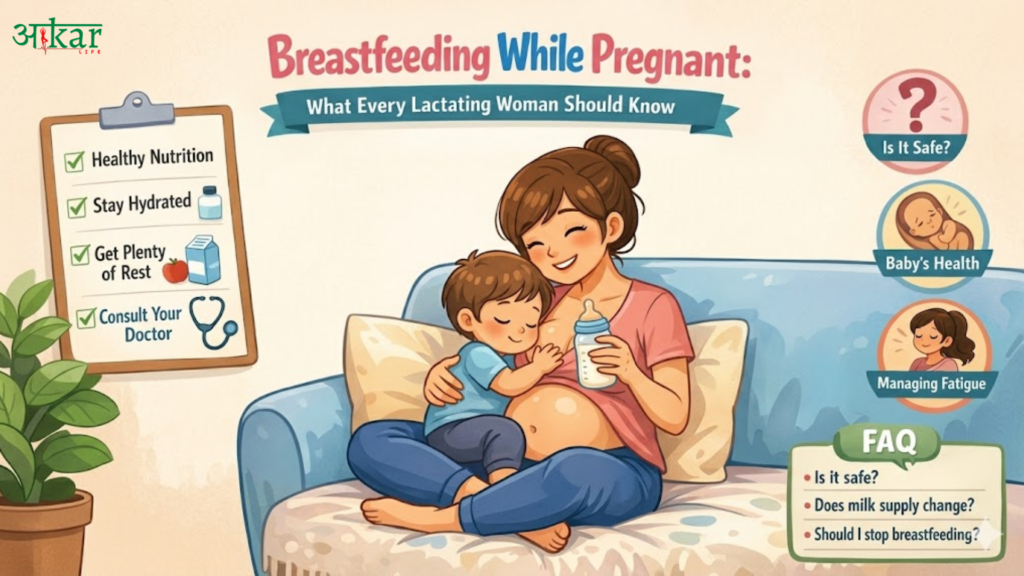
Pregnancy and breastfeeding are two of the most important and sensitive stages in a woman’s life. Sometimes these stages overlap, and many mothers find themselves breastfeeding while pregnant. This situation can raise many questions and concerns. Is it safe? Will it affect the unborn baby? Can the body support both pregnancy and breastfeeding at the same time?
For many lactating women, the idea of continuing to breastfeed during pregnancy can feel confusing. However, with the right knowledge and proper care, it can be managed safely. In this guide from AakarLife, we will explain what every mother should know about breastfeeding during pregnancy and how to maintain good health for both the mother and the babies.
Understanding Breastfeeding While Pregnant
Breastfeeding while pregnant simply means that a mother continues to nurse her older baby while expecting another child. Many mothers choose this option because their older child still depends on breast milk for nutrition and comfort.
For most lactating women, breastfeeding during pregnancy is generally safe if the pregnancy is healthy and there are no medical complications. The body is capable of adjusting to both pregnancy and milk production. However, every woman’s body is different, so it is always recommended to consult a healthcare professional before continuing breastfeeding.
How Pregnancy Affects Breast Milk
When a woman becomes pregnant, hormonal changes begin to occur in her body. These hormones can influence milk supply and the taste of breast milk. Many mothers notice that their milk supply decreases during the early months of pregnancy.
Some children may continue breastfeeding normally, while others may naturally start weaning because of the changes in taste or quantity. For lactating women breastfeeding while pregnant, this is completely normal and does not necessarily mean something is wrong.
Nutrition Needs for Lactating Women
A mother who is pregnant and breastfeeding needs extra energy and nutrients. Since the body is supporting both the growing baby and milk production, proper nutrition becomes extremely important.
Here are some key nutritional tips:
- Eat a balanced diet with fruits, vegetables, proteins, and whole grains
- Increase calorie intake slightly to support both pregnancy and breastfeeding
- Drink plenty of water to stay hydrated
- Include calcium-rich foods such as milk, yogurt, and leafy greens
- Take prenatal vitamins if recommended by your doctor
Maintaining a healthy diet helps ensure that both the unborn baby and the breastfeeding child receive the nutrients they need.
Possible Challenges While Breastfeeding During Pregnancy
Although many lactating women successfully continue breastfeeding while pregnant, some challenges may occur. These are usually normal and manageable.
1. Nipple Sensitivity
Hormonal changes during pregnancy can cause sore or sensitive nipples, making breastfeeding uncomfortable for some mothers.
2. Fatigue
Pregnancy already requires a lot of energy. Adding breastfeeding may increase feelings of tiredness.
3. Reduced Milk Supply
Many mothers notice a decrease in milk production during pregnancy.
4. Emotional Changes
Hormonal shifts can also affect mood and patience during breastfeeding sessions.
If breastfeeding becomes too uncomfortable or exhausting, mothers can gradually reduce feeding sessions and encourage gentle weaning.
When to Be Careful
While breastfeeding during pregnancy is usually safe, there are certain situations where doctors may recommend stopping.
These include:
- High-risk pregnancy
- History of premature labor
- Severe pregnancy complications
- Significant weight loss or poor maternal health
If any of these conditions occur, it is important for lactating women breastfeeding while pregnant to seek medical advice before continuing.
Tips for Managing Breastfeeding During Pregnancy
To make the experience easier, mothers can follow some simple strategies:
Listen to your body – Rest whenever you feel tired.
Maintain proper nutrition – Healthy food supports both the baby and the mother.
Stay hydrated – Drinking enough water is essential for milk production.
Adjust breastfeeding positions – Comfortable positions can reduce nipple discomfort.
Set boundaries – Shorter or less frequent feeding sessions may help manage fatigue.
Many mothers also find it helpful to talk with other women who have experienced breastfeeding during pregnancy. Support from family and healthcare professionals can make the journey smoother.
Emotional Support for Mothers
Pregnancy combined with breastfeeding can sometimes feel overwhelming. Mothers may worry about whether they are doing the right thing for both children.
It is important to remember that every family’s situation is unique. Some children naturally wean during pregnancy, while others continue nursing until the new baby arrives. Both experiences are normal.
At AakarLife, we believe that informed mothers can make confident decisions about their health and their children’s well-being.
Conclusion
For most healthy pregnancies, breastfeeding while pregnant can be safe and manageable. The body of lactating women is capable of adapting to both pregnancy and milk production when supported with proper nutrition, rest, and medical guidance.
The most important step is to listen to your body and consult a healthcare professional if you have any concerns. With the right care and knowledge, mothers can continue nurturing their children while preparing for the arrival of a new baby.
FAQ
1. Is breastfeeding while pregnant safe?
Yes, in most healthy pregnancies it is safe. However, mothers should consult a doctor to ensure there are no complications.
2. Does breastfeeding during pregnancy reduce milk supply?
Many women notice a decrease in milk supply due to hormonal changes. This is a normal part of pregnancy.
3. Can breastfeeding harm the unborn baby?
For healthy pregnancies, breastfeeding usually does not harm the unborn baby because the body can support both needs.
4. Should lactating women stop breastfeeding when they become pregnant?
Not necessarily. Many lactating women breastfeeding while pregnant continue safely. The decision depends on health conditions and personal comfort.
5. How can mothers stay healthy while breastfeeding during pregnancy?
Eating nutritious food, staying hydrated, getting enough rest, and consulting healthcare professionals are essential steps.